Friday, April 26, 2013

Bleak House...Quotes and All


I have promised a Bleak House post...so here it is! Even though I finished this novel several months ago, I cannot help but think of it! A review will be coming shortly... But in the meantime, I would like to share with you a few of my favorite quotes from Charles Dickens' greatest novel.

“...he had remarked that there were two classes of charitable people: one, the people who did a little and made a great deal of noise; the other, the people who did a great deal and made no noise at all.”
Charles Dickens, Bleak House

“if the world go wrong, it was, in some off-hand manner, never meant to go right.”
Charles Dickens, Bleak House

“I mean a man whose hopes and aims may sometimes lie (as most men's sometimes do, I dare say) above the ordinary level, but to whom the ordinary level will be high enough after all if it should prove to be a way of usefulness and good service leading to no other. All generous spirits are ambitious, I suppose, but the ambition that calmly trusts itself to such a road, instead of spasmodically trying to fly over it, is of the kind I care for.”
Charles Dickens, Bleak House

Esther Summerton herself says these lines:

“I found every breath of air, and every scent, and every flower and leaf and blade of grass and every passing cloud, and everything in nature, more beautiful and wonderful to me than I had ever found it yet. This was my first gain from my illness. How little I had lost, when the wide world was so full of delight for me.”
Charles Dickens, Bleak House

This I found particularly true, because I know someone very dear to me who experienced this re-awakening after a dreadful illness. My mother was in pain for two years. She tells me now that she is grateful for every occurrence, for every little good thing that happens in this world. She savors and lives life to the fullest, because by knowing pain she appreciates life and the time we spend together.

Oh my, very sorry to have gone into this tangent. I really could not help it, but seeing this quote for the first time made me think about certain things...

Here is another final quote that I wanted to share with you:

“A word in earnest is as good as a speech.”
Charles Dickens, Bleak House

Hmm...does that mean that we should dispense with too much convoluted talk and speak more from our hearts with honesty? What do you think?

It is a beautiful day. A wonderful day to ponder over some Charles Dickens, and to be grateful for God's blessings. And Charles Dickens.

Best,


Thursday, April 18, 2013

La Belle Dame Sans Merci

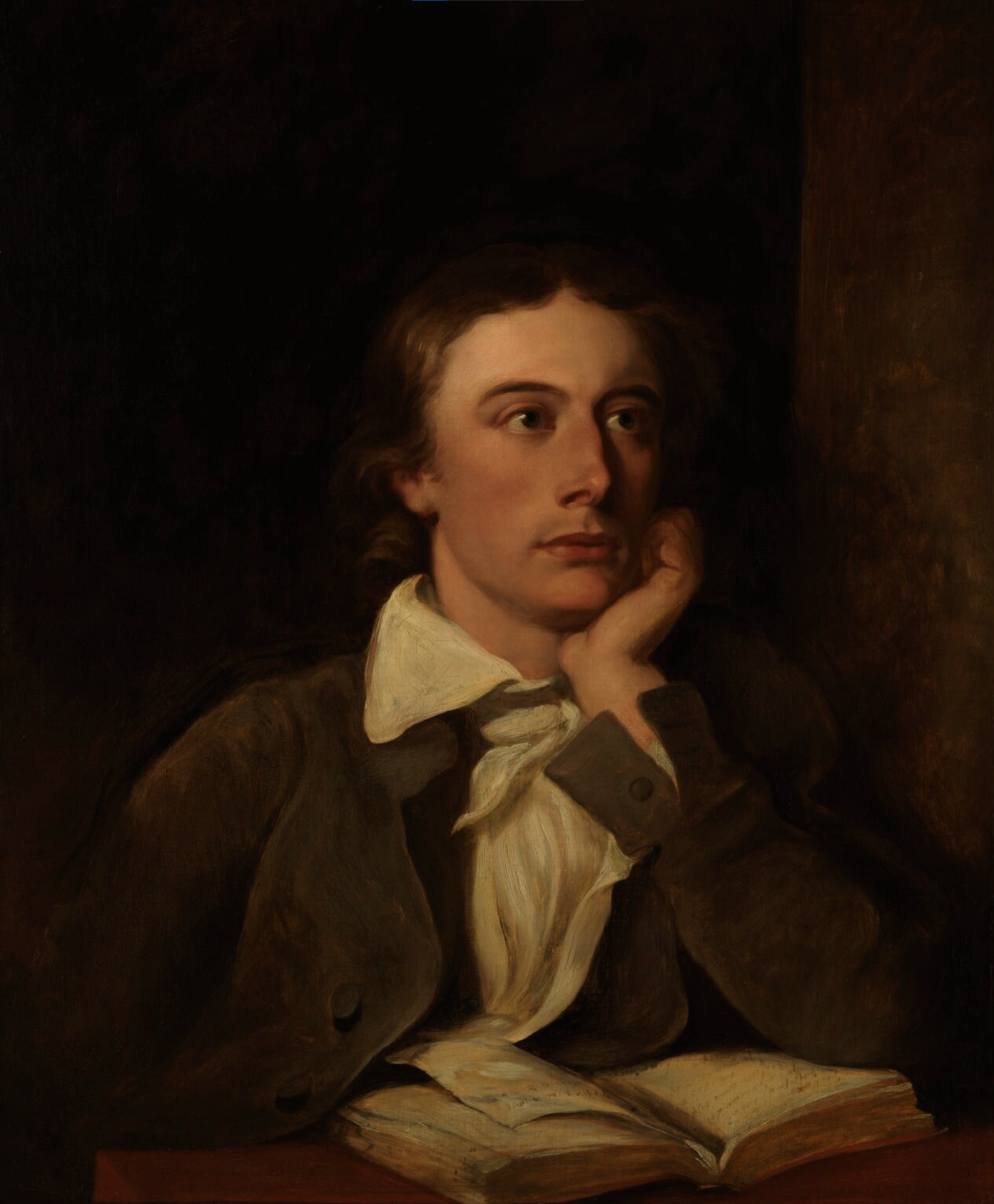
Unfortunately, I never seem to find enough time to read poetry, although when I do, I drift towards the Romantics like William Blake and John Keats. In fact, on of my favorite poets is the immortal John Keats.
wikipedia.org (William Hilton)
His poetry usually explores the beauty and sometimes sadness of nature. It is also wistful, and his poems depict a pure and innocent world - maybe one that does not even exist. His own life was anything but that which he aspired to in his work. He died at the tender age of 25 and his works were received badly by the critics. I imagine him as a young hero, for he had to endure alienation, poverty, and the death of his brother. Through all these obstacles, he wrote poetry, and did what he loved best. Instead of pursuing a steady medical career, he took upon himself the more dangerous path of a poet. 

  I feel angry when I find that most people have forgotten who Shakespeare was. I do not dare to ask whether they have read any Keats, for the answer would most likely make me froth in rage...

wikipedia.org (J.W. Waterhouse)
Anyways, this poem is beautiful. I have my own secret interpretation of this poem, but I will leave you to read it yourself. Do judge and tell me whether this poet deserves the highest praises.


'O WHAT can ail thee, knight-at-arms, 
Alone and palely loitering? 
The sedge is wither'd from the lake, 
And no birds sing. 

'O what can ail thee, knight-at-arms,           5
So haggard and so woe-begone? 
The squirrel's granary is full, 
And the harvest 's done. 

'I see a lily on thy brow 
With anguish moist and fever dew;            10
And on thy cheeks a fading rose 
Fast withereth too.' 

'I met a lady in the meads, 
Full beautiful—a faery's child, 
Her hair was long, her foot was light,        15
And her eyes were wild. 

'I made a garland for her head, 
And bracelets too, and fragrant zone; 
She look'd at me as she did love, 
And made sweet moan.                             20

'I set her on my pacing steed 
And nothing else saw all day long, 
For sideways would she lean, and sing 
A faery's song. 

'She found me roots of relish sweet,          25
And honey wild and manna dew, 
And sure in language strange she said, 
"I love thee true!" 

'She took me to her elfin grot, 
And there she wept and sigh'd fill sore;    30
And there I shut her wild, wild eyes 
With kisses four. 

'And there she lullèd me asleep, 
And there I dream'd—Ah! woe betide! 
The latest dream I ever dream'd                35
On the cold hill's side. 

'I saw pale kings and princes too, 
Pale warriors, death-pale were they all; 
They cried—"La belle Dame sans Merci 
Hath thee in thrall!"                                  40

'I saw their starved lips in the gloam 
With horrid warning gapèd wide, 
And I awoke and found me here, 
On the cold hill's side. 

'And this is why I sojourn here                45
Alone and palely loitering, 
Though the sedge is wither'd from the lake, 
And no birds sing.'

Oh my goodness. Beautiful. Ethereal. I love it. What do you think?

Now here is my private interpretation: There is a fairy maid who falls in love for the first time, although she has broken many hearts with her beauty. She tells her lover so  ("I love thee true!"), but she has a curse on herself; she cannot stay with him forever, she has to leave in the morning. Hating the thought of being separated, she cries about it (And there she wept and sigh'd fill sore;). So in this version of the story, she is not cruel. She is just tortured by her circumstances. She disappears because she has to...

Now, I hear all of you cry out "For shame, Kathleen! What are you doing twisting Keats' words to fit your tale? It doesn't even make sense. In the end of the poem, everyone denounces her. How can you make that fit inside your theory?"

And I will look at you with a sheepish grin, and with wide eyes say, "T'is true, too true...my imagination does run a little wild now and again. I always want fairies to be benevolent...She is too fair to be malevolent. I am listening...I'll stop this nonsense this very minute. I told you that it was my private interpretation...(smiles)"

Ahem...jokes aside. I do envision John Keats' poem as he would have...but sometimes, I do enjoy making up little backstories (broad grin).

Now...I hope that you fancied that little bit of Keats...and if you did, do read some others. There is a wonderful site www.john-keats.com where all his poems and his letters are available. 

Have a wonderful day,